


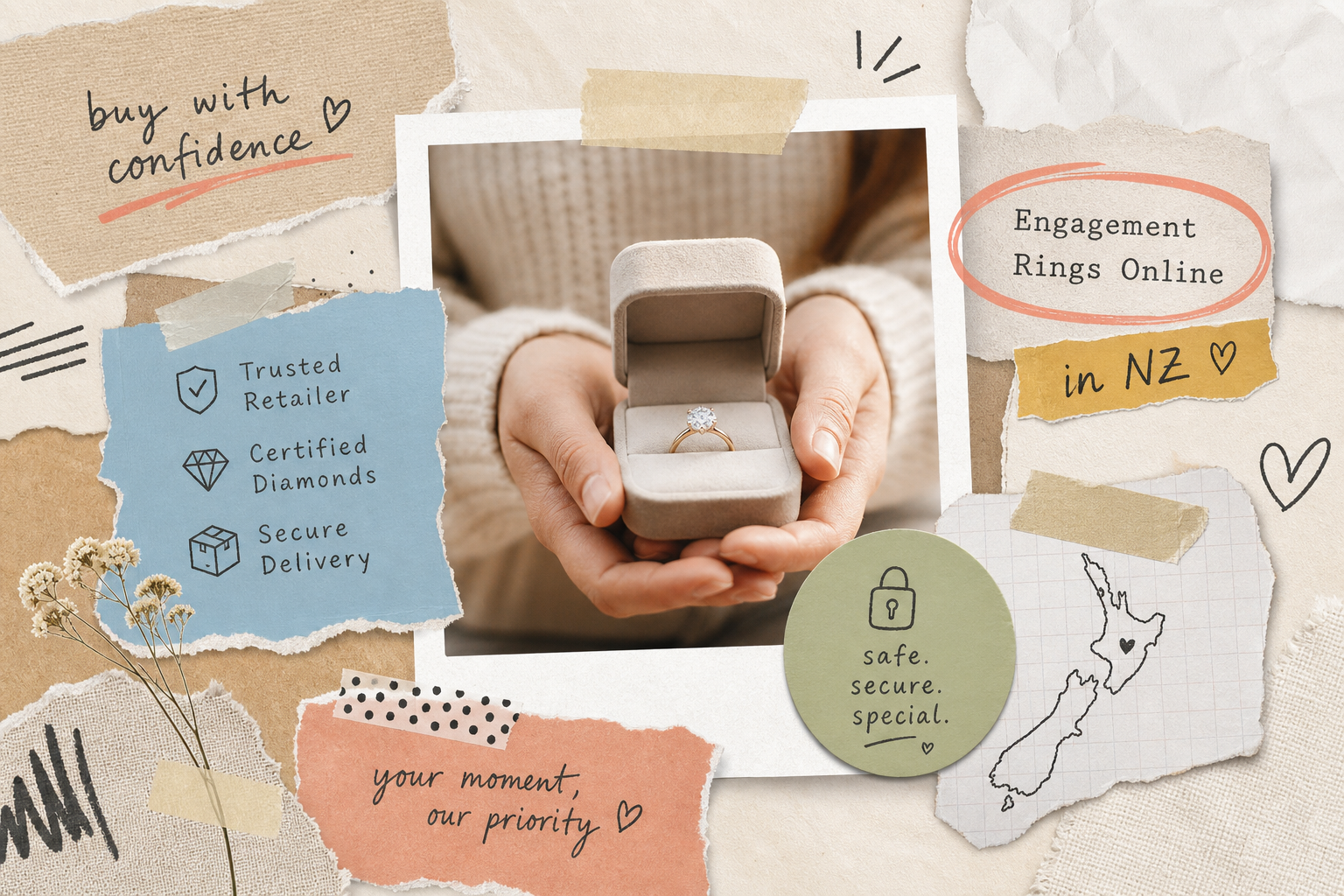
Most couples I speak with have already done the research. They know the difference between IGI and GIA. They've spent hours looking at ring styles online. Many choose lab-grown diamonds because they typically cost less per carat, letting you buy a larger stone for the same budget. And then they freeze at checkout, because the ring they're about to buy costs thousands of dollars and they haven't held it in their hands.
That hesitation is understandable. It's also completely solvable. If you're wondering how to buy an engagement ring online in New Zealand, this guide walks you through the checks that make it safe. We'll cover how to verify diamond certification, what realistic NZ pricing looks like across carat sizes and settings, what your shipping and return rights are, and a 7-point checklist to work through before you confirm the purchase.
Why buying an engagement ring online has genuinely changed
The old concerns no longer hold up
Five years ago, the concern about buying fine jewellery online was fair. Photography was inconsistent, seller policies were vague, and independent certification wasn't always easy to verify. That market looks considerably different now. High-resolution imagery, 360-degree stone videos, verified customer reviews, and interactive ring builder tools have become widely available, giving online buyers more detailed information than many physical showrooms provide.
The biggest concern buyers still raise is not being able to see or touch the ring before committing. What replaces that physical reassurance is certification. An independent grading report tells you exactly what you're buying, down to cut, colour, clarity, and carat, and that report number can be verified on the grading lab's website before you spend a dollar. Combine that with detailed stone specifications and a real-time design tool, and the information gap between online and in-store closes almost entirely.
What a trustworthy online jeweller looks like today
There are specific signals that separate reputable online jewellers from the rest. Look for independently certified stones with verifiable report numbers, return and warranty policies displayed clearly on the site (not buried in fine print), named customer support you can contact before and after purchase, and a design tool that lets you configure your ring in real time before committing. For any jeweller worth buying from, these are the baseline expectations, not bonus features. Examples of modern retailers and resources that demonstrate these practices include Temple & Grace and articles outlining 3D ring design online tools.
Nura Lab's Ring Builder shows how this works in practice. You choose your stone type (lab-grown diamond or moissanite), select your carat weight and cut, then pick your setting style, metal, and band details. The ring updates as you build it, so what you see on screen reflects exactly what will be made. That level of transparency is what buying an engagement ring online should look like. Many retailers pair their builders with practical how-to resources, such as a design custom engagement ring online guide, to help buyers finalise their decisions.
Certification: how to verify what you're actually buying
GIA vs IGI: which certificates matter for lab-grown diamonds
Both GIA and IGI grade diamonds across the same four criteria: cut, colour, clarity, and carat weight. For lab-grown diamonds specifically, IGI is the most widely used and widely accepted grading lab in 2026. IGI reports are detailed, include lab-specific information such as the diamond's growth method (CVD or HPHT), and are the standard you'll see from reputable online retailers globally and in New Zealand. GIA is the more conservative and prestigious grading authority overall, but it only began fully grading lab-grown diamonds in 2020 and is less common in the lab-grown segment. For deeper comparisons, see a dedicated


