

White Gold vs Platinum: The Engagement Ring Metal Guide
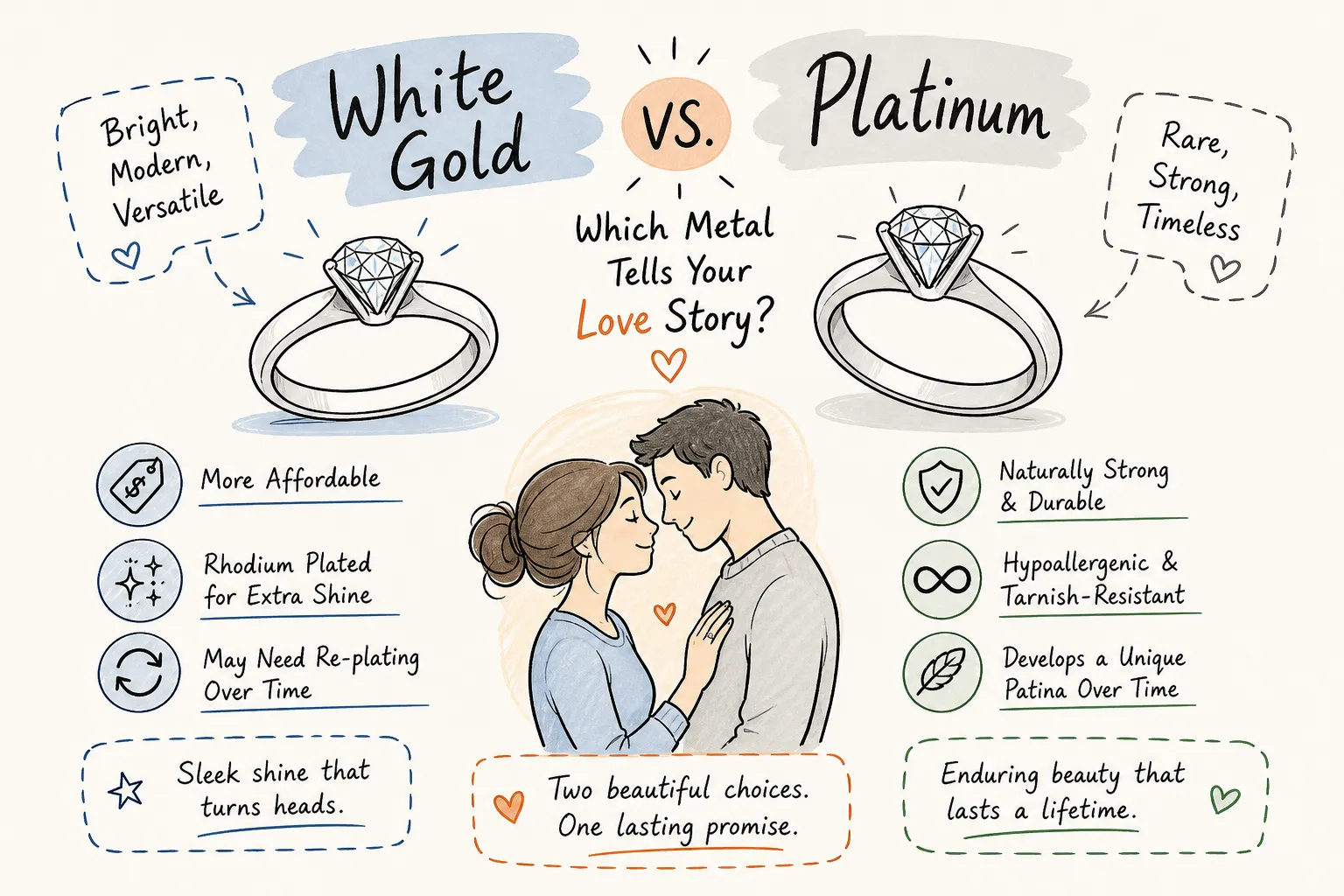
Choosing between a white gold or platinum engagement ring is one of the first decisions many couples make. Both metals have an elegant, silvery-white appearance and look beautiful with round brilliant, oval, and other lab-grown diamond shapes. However, they behave very differently over a lifetime of daily wear.
White gold has a bright rhodium-plated finish and a lower initial price. Platinum is naturally white, dense, hypoallergenic, and requires no replating, but generally costs more upfront. At Nura Lab, the right choice always comes down to your lifestyle, your budget, your maintenance preferences, and how you want your ring to age over time.
This guide compares white gold and platinum across appearance, durability, cost, care, allergies, comfort, and long-term value to help you make a confident decision.
How White Gold and Platinum Look on the Hand
The Colour Difference Most People Miss
Both metals offer a cool, silvery-white look, but they achieve it in different ways. White gold begins as a gold alloy mixed with white metals such as palladium or nickel. It is then coated with rhodium to create its bright, reflective finish.
Platinum is naturally white with a subtle grey-white tone. It does not need a surface coating to maintain its colour. This gives platinum a softer, less mirror-bright appearance than freshly rhodium-plated white gold.
For an independent overview of colour, feel, and visual differences, see this white gold vs platinum comparison.
What Rhodium Plating Does
Fresh rhodium plating gives white gold an exceptionally bright, almost glass-like finish. It looks crisp in photographs and creates a strong contrast with near-colourless lab-grown diamonds.
Rhodium is a surface treatment, however, and it wears over time. With regular daily wear, some people begin to notice a warmer undertone after one to two years, particularly on the inside of the ring shank and areas exposed to friction. Replating restores the original bright-white finish.
For a deeper explanation of rhodium plating and how long it lasts, read this guide to rhodium plating.
Platinum Patina: Character or Imperfection?
Platinum develops a soft satin-like sheen over time, often called a patina. It usually appears first on the underside of the ring, where everyday friction is strongest. Some wearers enjoy the slightly antique, lived-in character it creates, while others prefer to have their ring periodically polished back to a high shine.
Unlike white gold, platinum does not change colour as it ages. Its natural white tone remains consistent, even as the surface finish changes.
White Gold vs Platinum: Durability Compared
Scratch Resistance Is Only Part of the Story
14K white gold is harder than platinum, which means it can resist surface scratches better in everyday use. However, when white gold scratches, tiny amounts of metal may be removed from the surface. Over many years, this can gradually thin the ring shank and prongs.
Platinum is softer, but it behaves differently when scratched. Instead of losing metal, platinum tends to displace it sideways. This means the ring retains more of its original mass over time, which can be valuable for long-term durability and stone security.
14K vs 18K White Gold
Not all white gold is equally durable. 14K white gold contains 58.5% gold and is generally harder and more resistant to everyday wear. 18K white gold contains 75% gold, giving it a richer gold content but making it softer and more susceptible to surface wear.
For active lifestyles or hands-on work, 14K white gold is often the more practical choice. For buyers who prioritise gold purity and a more luxurious alloy, 18K can still be an excellent option with proper care.
Long-Term Stone Security
For rings with fine claw, pavé, halo, or delicate multi-stone settings, platinum can offer an advantage over decades of wear. Its density and tendency to retain material make it particularly suitable for prongs that hold valuable stones in place.
White gold can absolutely be maintained successfully through regular jewellery checks and occasional claw re-tipping. However, platinum generally requires less intervention over the life of the ring when stone security is a top priority.
The Cost Difference in New Zealand
Why Platinum Costs More
Platinum engagement rings in New Zealand commonly cost around 20% to 30% more than an equivalent white gold setting. Platinum is typically 95% pure, is significantly denser than gold, and requires specialised tools and skills to work with during manufacturing and repair.
For a mid-range engagement ring setting, the difference may amount to several hundred dollars before the cost of the centre stone is included.
Long-Term Cost: Replating vs Polishing
White gold has a lower upfront price, but it requires periodic rhodium replating to maintain its brightest white finish. In New Zealand, standard ring replating is often around NZ$75, with many daily wearers choosing to replate every one to three years.
Platinum does not need replating. Polishing is optional and may cost approximately NZ$35 to NZ$100, depending on the jeweller and ring design. Over ten years, the difference in long-term ownership costs can be narrower than the original purchase price suggests.
Learn more about how often replating may be needed through this guide to white gold replating.
Comparing Metals in the Nura Lab Ring Builder
Nura Lab’s Ring Builder lets you compare 14K white gold, 18K white gold, and platinum across a range of engagement ring settings. Whether you prefer a solitaire, halo, trilogy, pavé, or bezel ring, you can see how the metal choice affects the design and price before making a decision.
Explore available designs in the Nura Lab Engagement Ring Styles Guide.
Maintenance and Everyday Care
White Gold Maintenance
Most people who wear a white gold engagement ring daily will eventually notice rhodium plating wear, particularly on the inner shank and below the setting. A standard replating service can restore the ring’s original bright finish, often within a few days.
White gold is an ideal option for couples who love a brilliant white finish and do not mind occasional professional maintenance.
Platinum Maintenance
Platinum does not require plating, but it develops fine surface scratches and patina through normal wear. Most owners simply choose a professional polish when they want to refresh the ring’s appearance rather than following a strict maintenance schedule.
At-Home Care for Both Metals
For both white gold and platinum engagement rings, use mild soap, warm water, and a soft cloth for regular cleaning. Avoid harsh chemicals, abrasive cleaners, bleach, chlorine, and activities that expose the ring to unnecessary impact or friction.
Allergies, Weight, and Comfort
Nickel Allergies and White Gold
Some white gold alloys use nickel to create a whiter colour. Nickel is a common contact allergen and can cause itching, redness, or a rash for sensitive wearers, particularly if rhodium plating becomes worn over time.
Before choosing a white gold engagement ring, ask whether the alloy is nickel-based or palladium-based. Palladium-based white gold is nickel-free and can be a suitable option for many people with sensitive skin.
For background information, see this review of nickel contact allergy.
Why Platinum Works Well for Sensitive Skin
Platinum is generally regarded as hypoallergenic because it is typically 95% pure and largely inert. For anyone with a known metal sensitivity or history of reacting to rings, watches, or bracelets, platinum can offer valuable peace of mind.
Weight and Feel
Platinum is denser than white gold, so the same engagement ring design will feel noticeably heavier in platinum. Many people enjoy its substantial, luxurious feel, especially in a classic solitaire. Others prefer white gold because it is lighter and easier to forget they are wearing.
The difference becomes more noticeable in wider bands, halos, and multi-stone settings. Comfort is personal, so trying on rings or discussing proportions with your jeweller can be helpful.
Should You Choose Platinum or White Gold?
Choose Platinum If You Want:
- A naturally white, hypoallergenic metal.
- No rhodium replating requirement.
- Excellent long-term metal retention and stone security.
- A durable option for an active or hands-on lifestyle.
- A ring that can develop a soft patina over time.
- To invest more upfront in exchange for lower recurring maintenance.
Choose White Gold If You Want:
- A lower upfront price than platinum.
- A bright, crisp rhodium-plated white finish.
- A lighter-weight ring for everyday comfort.
- The option of 14K gold for greater scratch resistance.
- A metal you are comfortable replating periodically.
- A palladium-based alloy if nickel sensitivity is a concern.
Compare Engagement Ring Metals with Nura Lab
The best metal is not simply the most expensive one. It is the metal that suits your hands, habits, aesthetic preferences, skin sensitivity, and budget.
At Nura Lab, you can choose your lab-grown diamond or moissanite, select a setting, and compare 14K white gold, 18K white gold, and platinum before purchasing. Every ring includes free customisation, a lifetime ring warranty, and free resizing.
If you are purchasing online, read our guide on how to safely buy an engagement ring online in NZ. You can also explore our detailed comparison of yellow gold, white gold, rose gold, and platinum engagement ring metals.


