


Lab Grown Diamonds in NZ: Price, Quality and Where to Buy
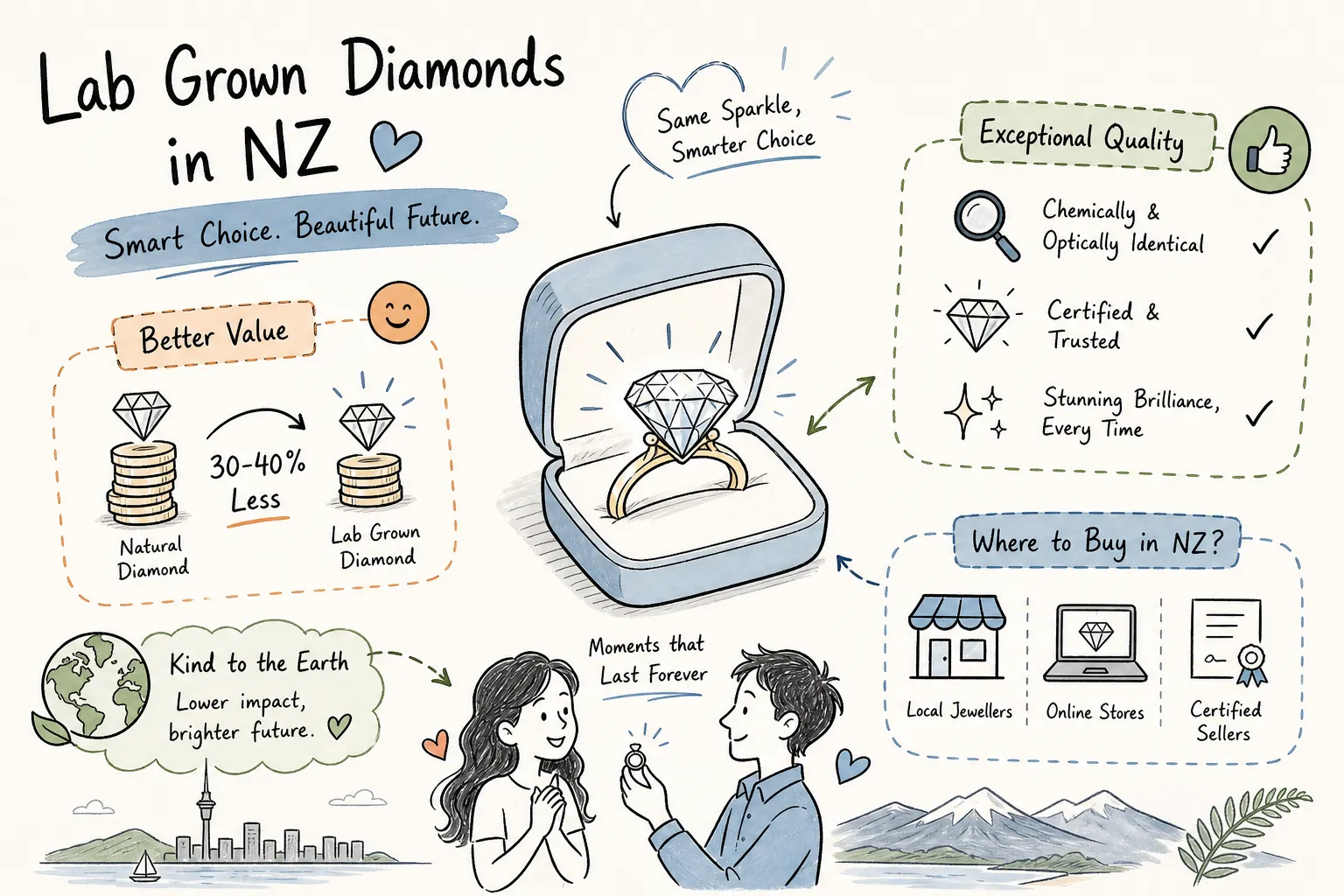
Lab grown diamonds are chemically, physically, and optically identical to mined diamonds. They are not simulants, glass, or cheap imitations. They share the same crystal structure, the same hardness (10 on the Mohs scale), and the same brilliance as stones extracted from the earth—just grown in a controlled facility.
For New Zealand buyers in 2026, the question is no longer about authenticity, but about value. This guide covers how lab diamonds are made, how they are graded, and how to find the best quality for your budget in the NZ market.
How Lab Grown Diamonds are Made: CVD vs HPHT
There are two primary methods for creating gem-quality diamonds: CVD (Chemical Vapour Deposition) and HPHT (High Pressure High Temperature). Both produce real diamond material.
- CVD: Grown layer-by-layer in a low-pressure chamber using carbon-rich gas.
- HPHT: Replicates the intense geological pressure and heat of the earth's mantle.
For the wearer, the method is essentially irrelevant. Both produce stones indistinguishable to the naked eye. What matters infinitely more is Cut quality, which determines the stone's sparkle and presence. For a deeper look at the tech, check out this CVD vs HPHT comparison.
Quality and Certification
Lab diamonds are graded using the same "Four Cs" framework as mined stones: Cut, Colour, Clarity, and Carat weight. However, not all certificates are equal.
- IGI: The most common choice for lab diamonds, providing full granular grades for all 4Cs. Compare GIA vs IGI here.
- GIA: Carries high prestige, though their reporting for lab-grown stones is sometimes more simplified than their mined reports.
- GCAL: Often includes light-performance analysis for added assurance.
Pro Tip: Always verify the certificate number on the laboratory's official website before purchasing. Any reputable NZ jeweller should provide this number upfront.
The Ethical and Environmental Case
Lab grown diamonds sidestep many of the environmental issues of open-pit mining, such as massive land displacement and habitat destruction. When produced using renewable energy, their carbon footprint can be up to 90% lower than mined diamonds. For a full breakdown, see Pandora's sustainability findings.
Price Comparison in NZ: Mined vs Lab
In 2026, the price gap is substantial. Lab grown diamonds typically cost 70% to 95% less than mined stones of the same grade. In NZ terms, where a 1-carat mined diamond might cost upwards of NZ$7,000, a comparable lab stone can often be found for under NZ$600 at some vendors (stone only).
At Nura Lab, you can often secure a 1.2ct to 1.5ct lab-grown stone for the same budget that would only afford a 0.7ct mined diamond elsewhere. This allows buyers to prioritise size and quality without financial compromise.
Where to Buy Lab Diamonds in NZ
While retailers like Michael Hill and Pascoes offer lab-grown ranges, Nura Lab stands out for its specialised focus on ethical, custom pieces. All our rings are crafted in solid 14K/18K gold or platinum and come with a lifetime warranty and free resizing.
Ready to explore? Use our Ring Builder to compare stones and settings in real-time, or browse our Lab-Grown Diamond FAQ for more details.


